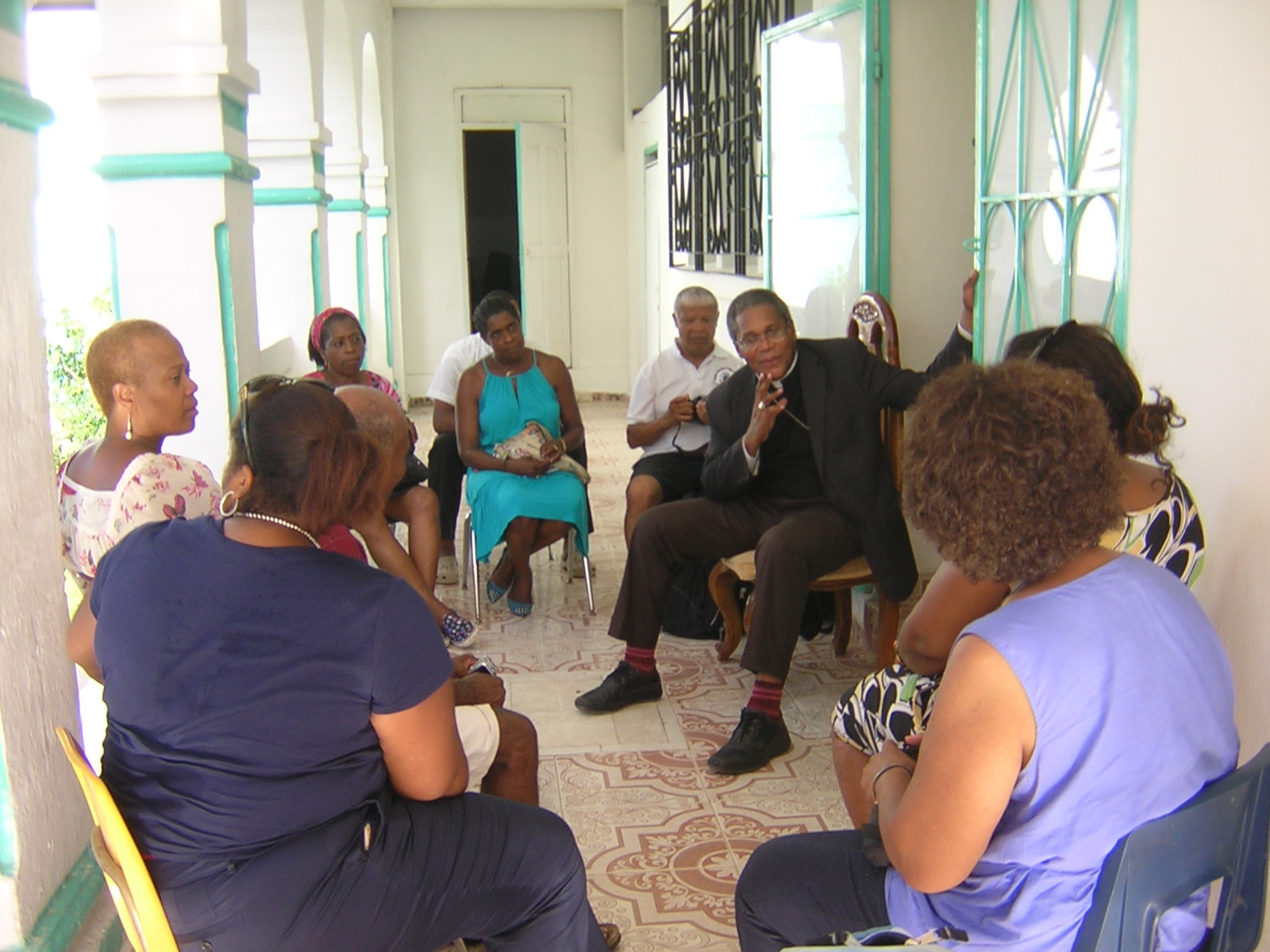
Day 17 – Tuesday May 28, 2013

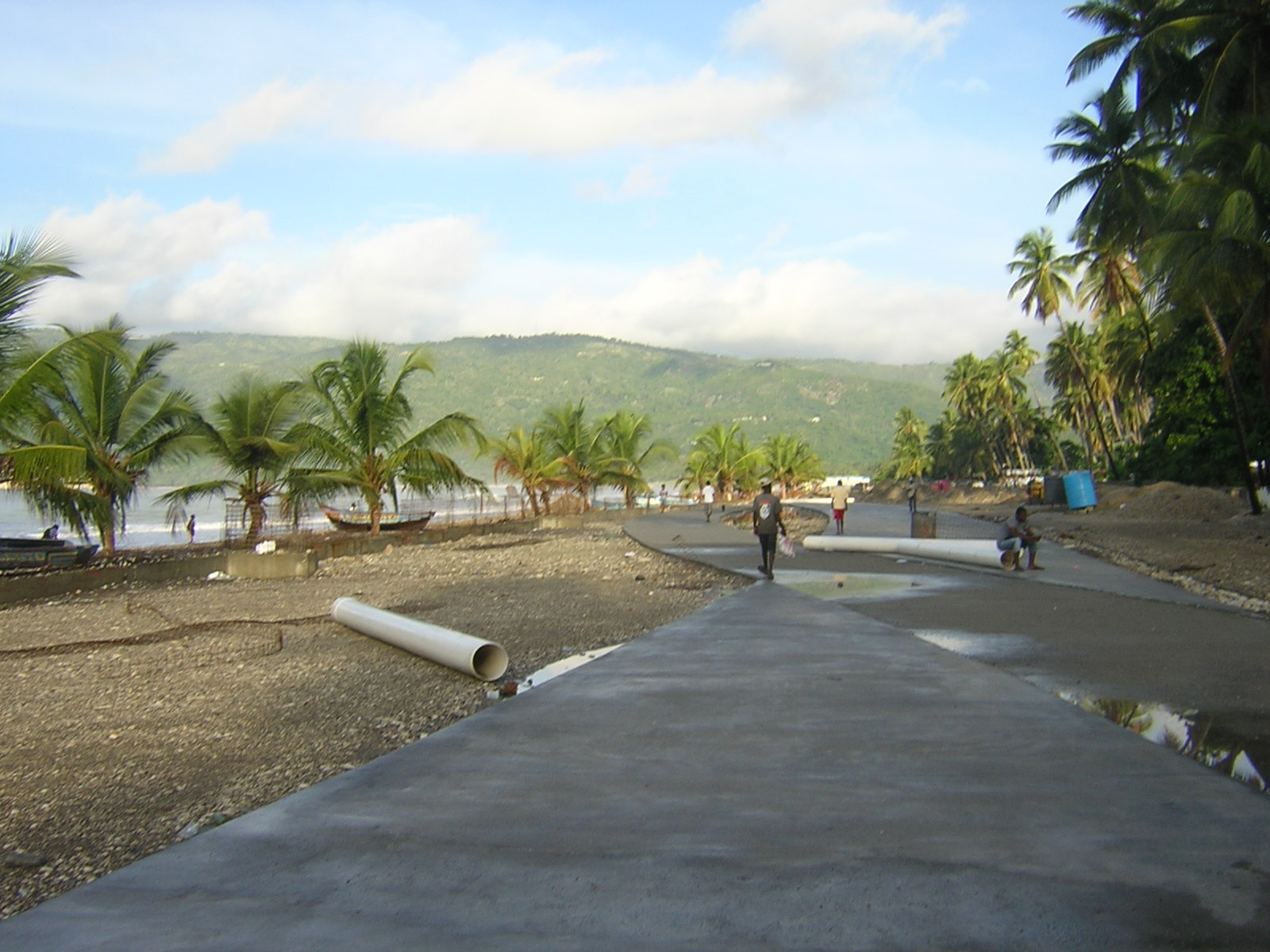
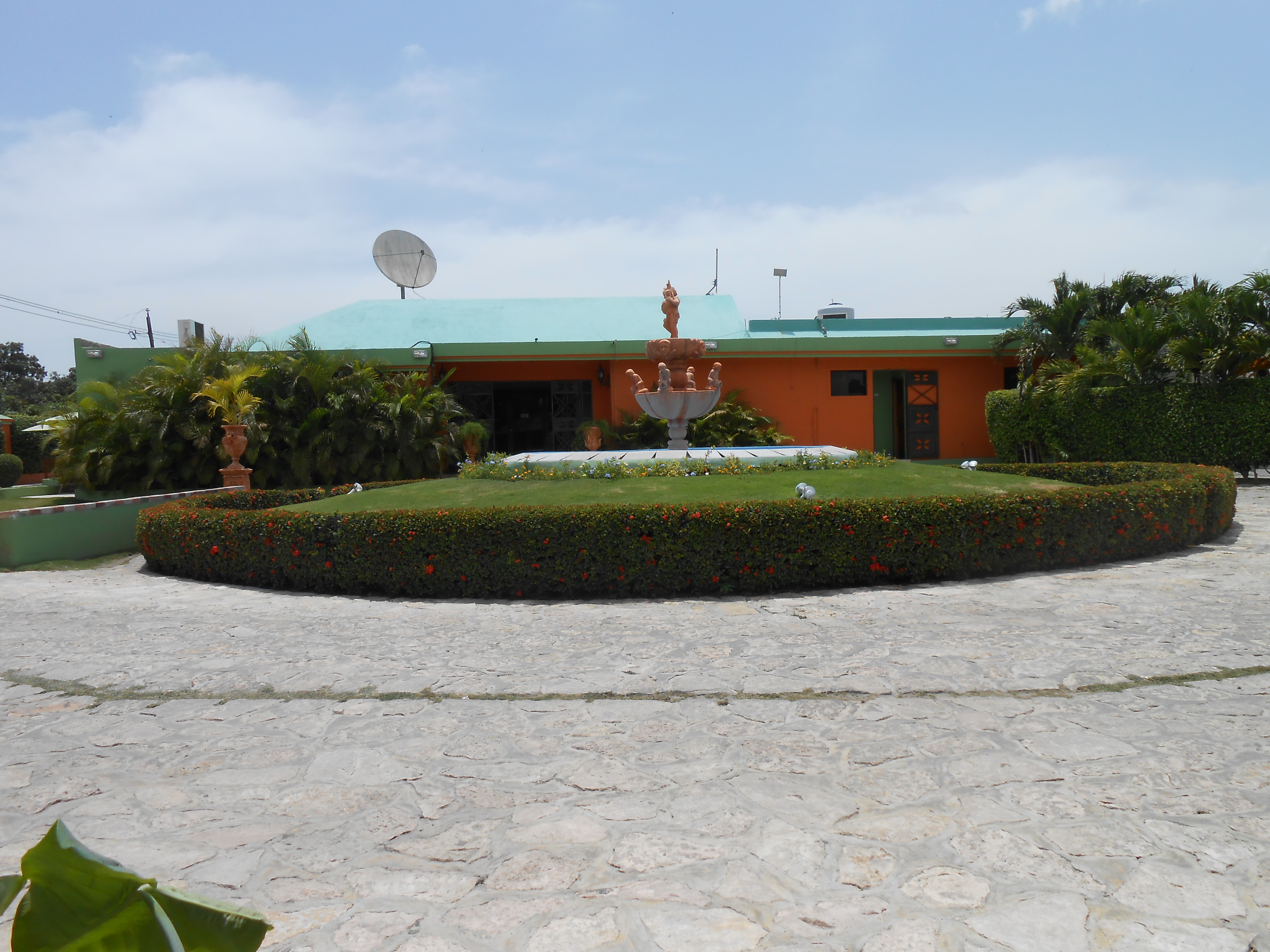
Today I woke up at 6:15 am, had a cold shower, and coffee.  After my prayers, Eddy asked if I wanted to go for a walk in the neighborhood.  We went to the ‘bodmè’, where the project on tourism is trying to construct a boardwalk.
D16-H (384) H (383)
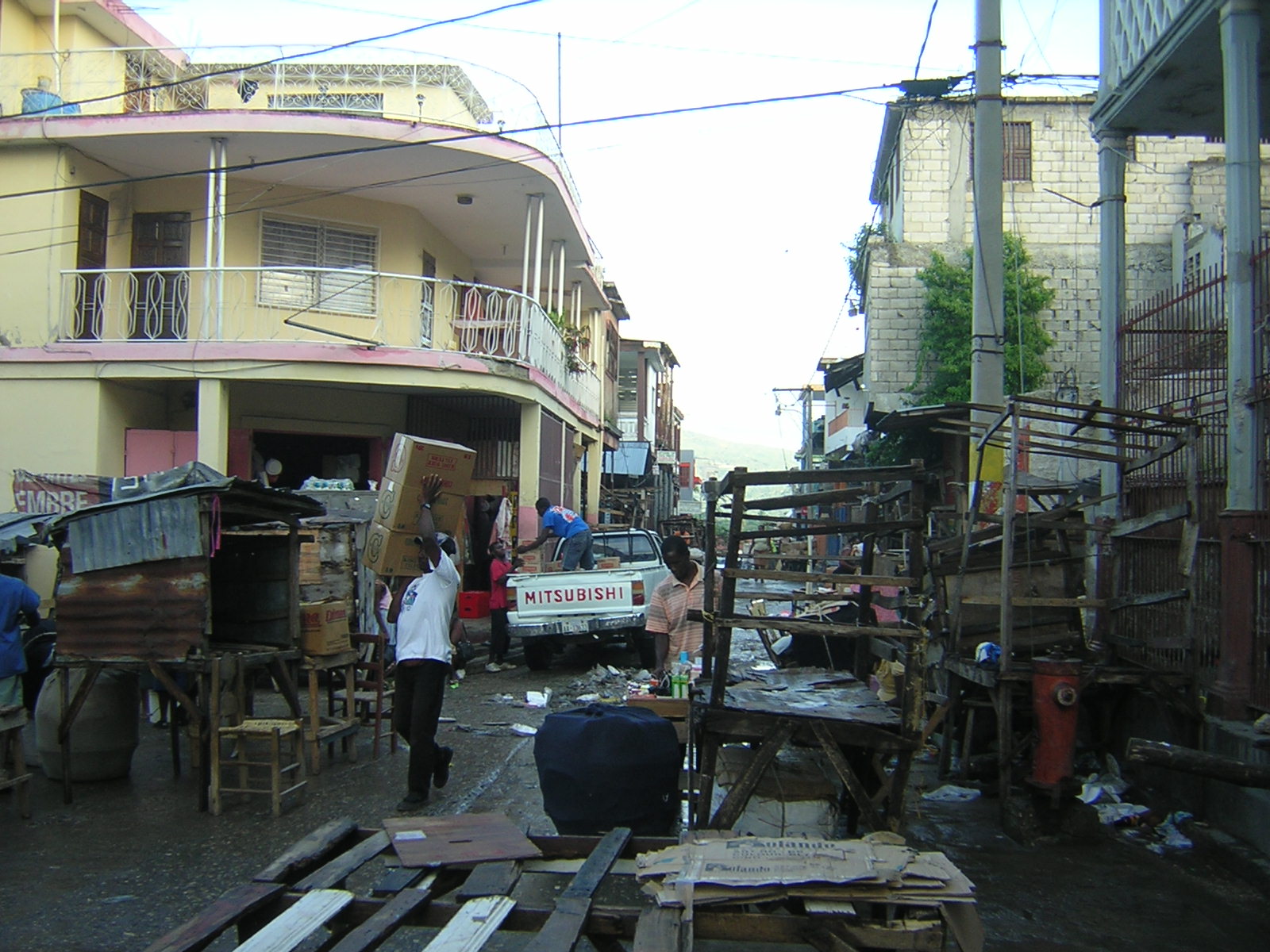
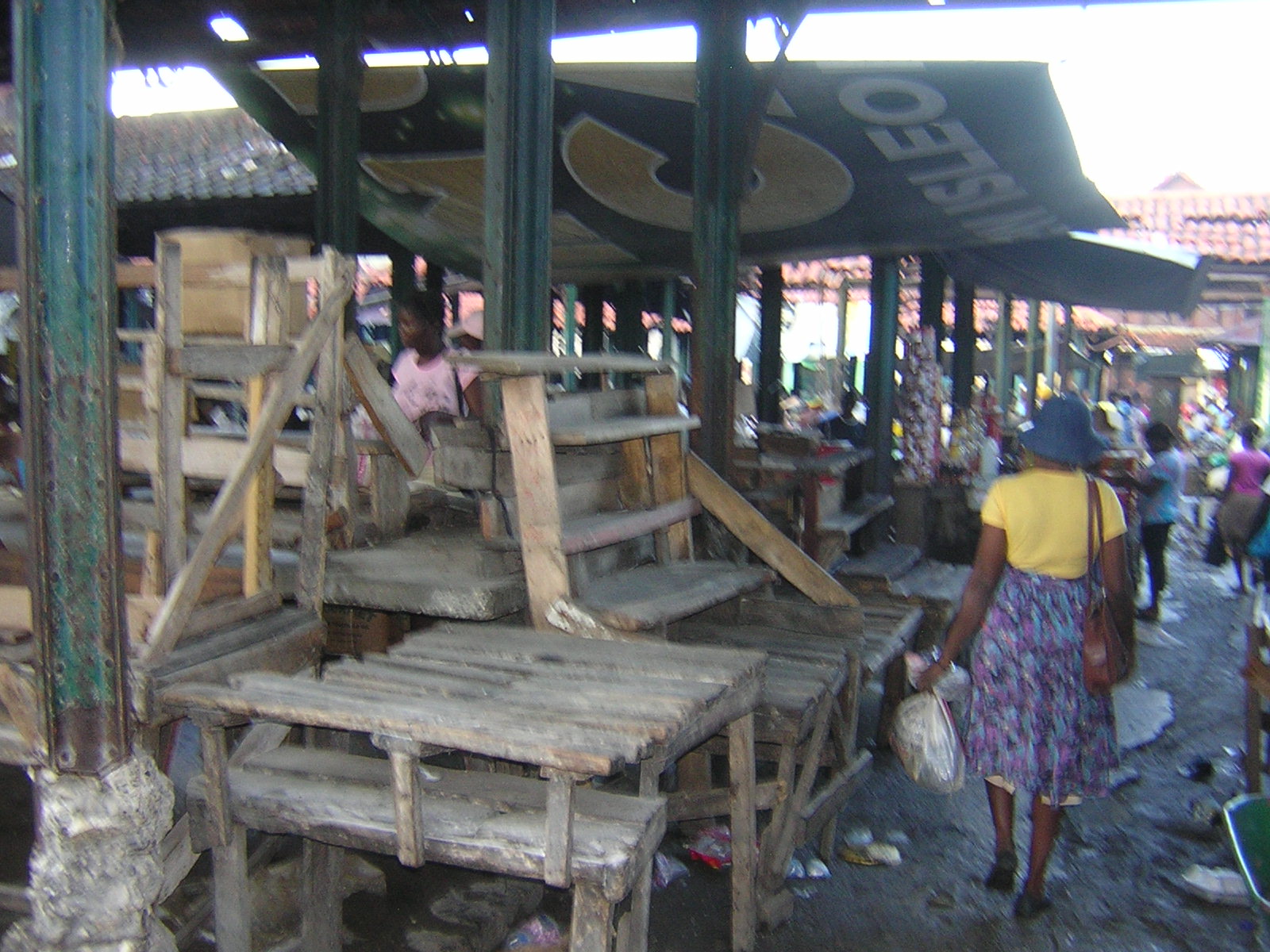
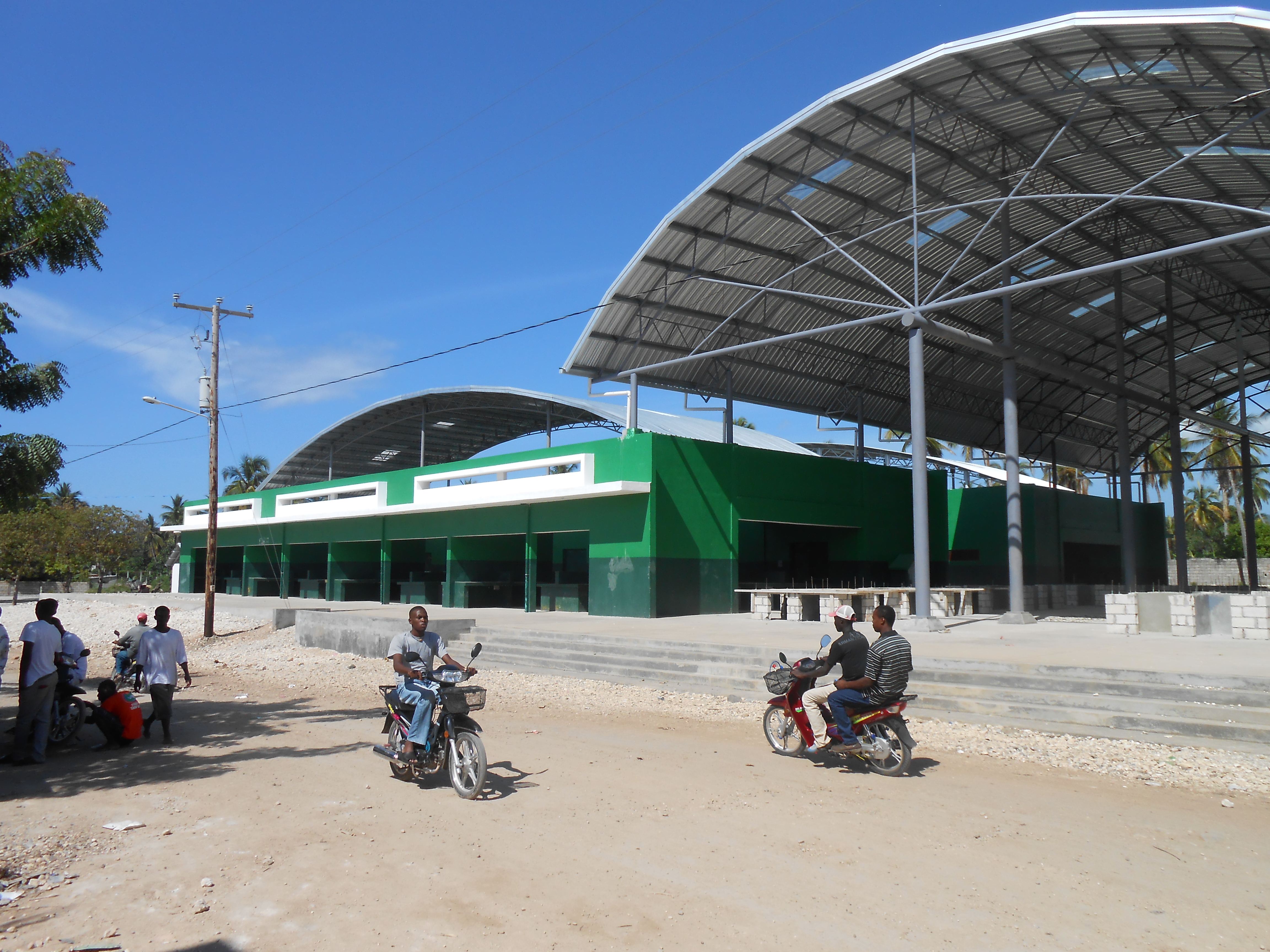
The roadway is being built with spots for vegetation. The shore was dirty and filled with trash.  I felt, however, that the ocean should also be cleaned and cured at the same time to get the people in the habit of keeping it unpolluted. The town needs to work with the citizens to have the streets kept clean. The market place extends itself to the street of private houses creating unsanitary conditions.  The home owners are hostages to the situation unable to get their car in or out of their homes from 6 am to 6 pm, sometimes 7 pm and the vendors leave their display cart on the private residents’ door steps.  I went to the structures being erected as a new ‘marche’ for the town.  Hope the people will be educated on how to keep it spotless.
H (364) H (367) DSCN0731 DSCN0732
I climbed the stairs leading to the plaza easily.  This is part of the town’s original set up.  I was told that another stairway connecting areas of town was sealed by a foreigner that had bought land nearby disregarding the history and tradition of town because he had connection with the mayor of the city.   Money and power in action!

D17-H (391)

Historic landmark

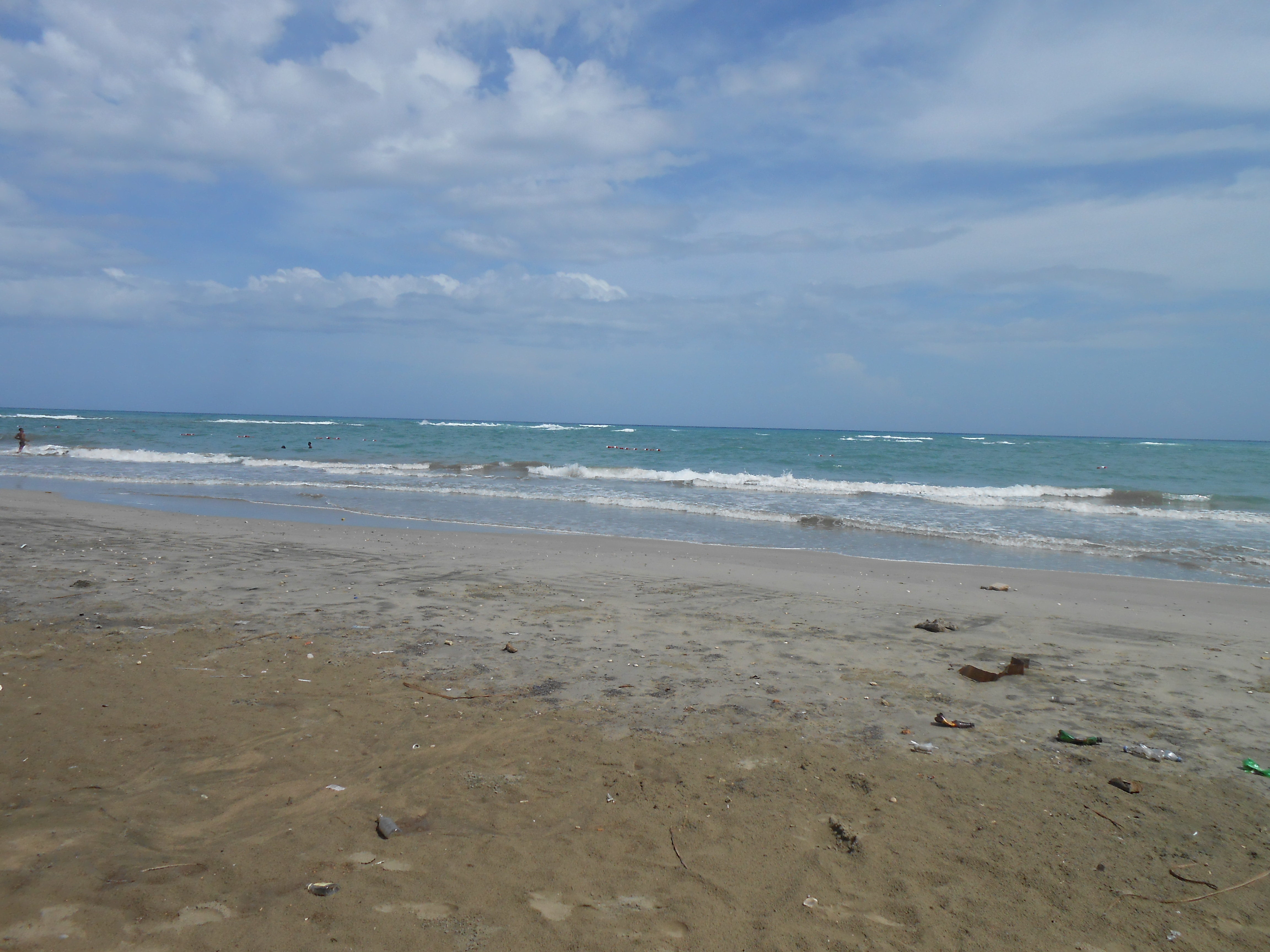
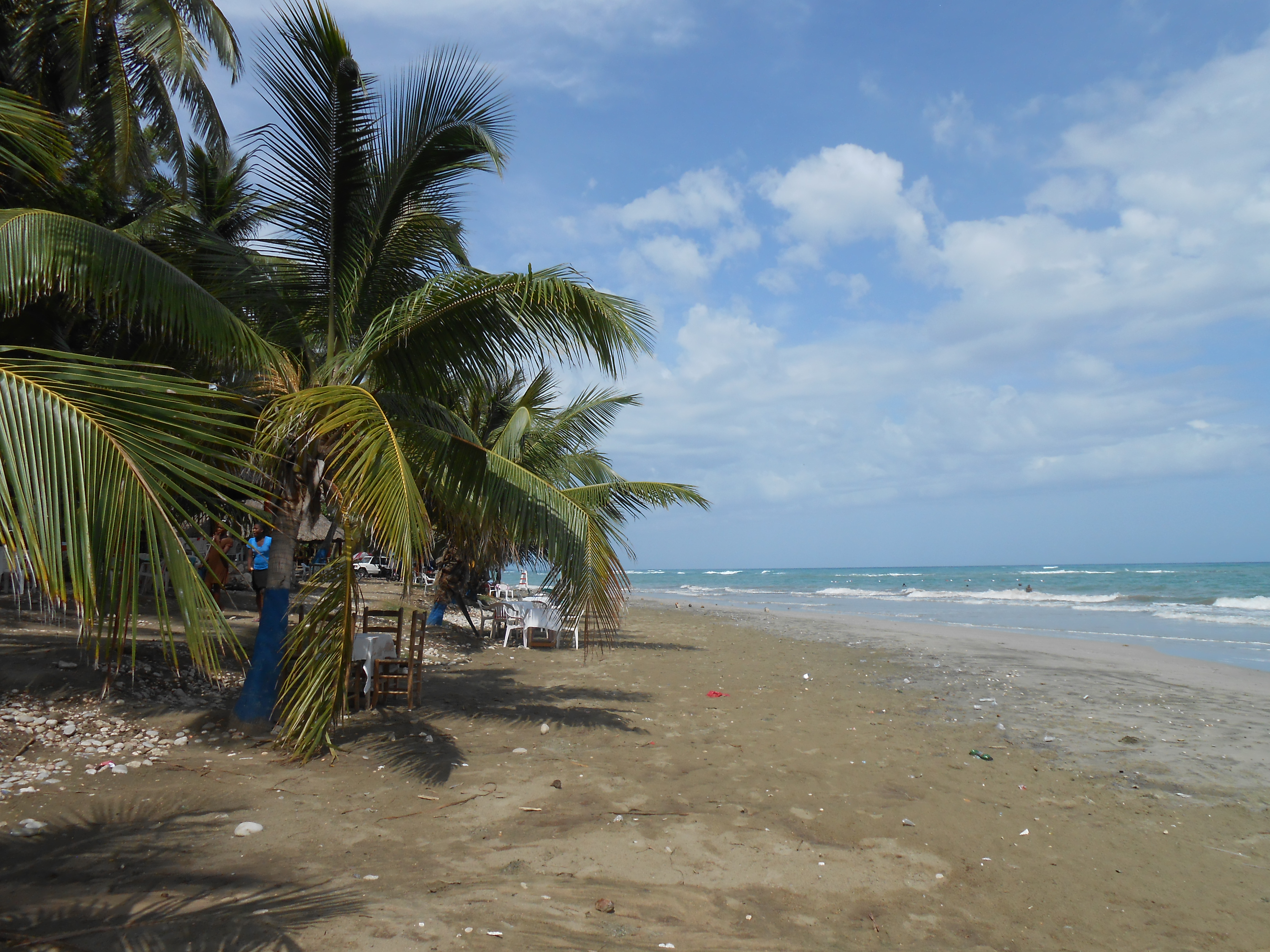
After lunch, we decided to go to the beach.  On our way, we passed Cine Institute.  I asked my host to bring me there.  When we arrived the guard asked my name and I told  him that I wanted to visit the facility because I was told by David Belle to stop by when I was in Jacmel.  The guard told me that he was not authorized to let anyone in.  I mentioned that when I attended three events in NY sponsored by and for Belle he had said that we would be welcomed. He gave us the number of Paula to call and it went right to voice mail.  I took a picture of the gate with the guard but there was nothing else in sight.  We left to proceed to ‘Raymond les Bains’ beach.   The water in the distance was so beautiful but the beach area had empty coconut shells, leaves, …  The sand close to the water edge was gray.  It had rained heavily during the night and the water was not that clear.  I did not feel like going in for a swim.  I walked along the shore letting my feet only get wet.
DSCN0839 DSCN0841
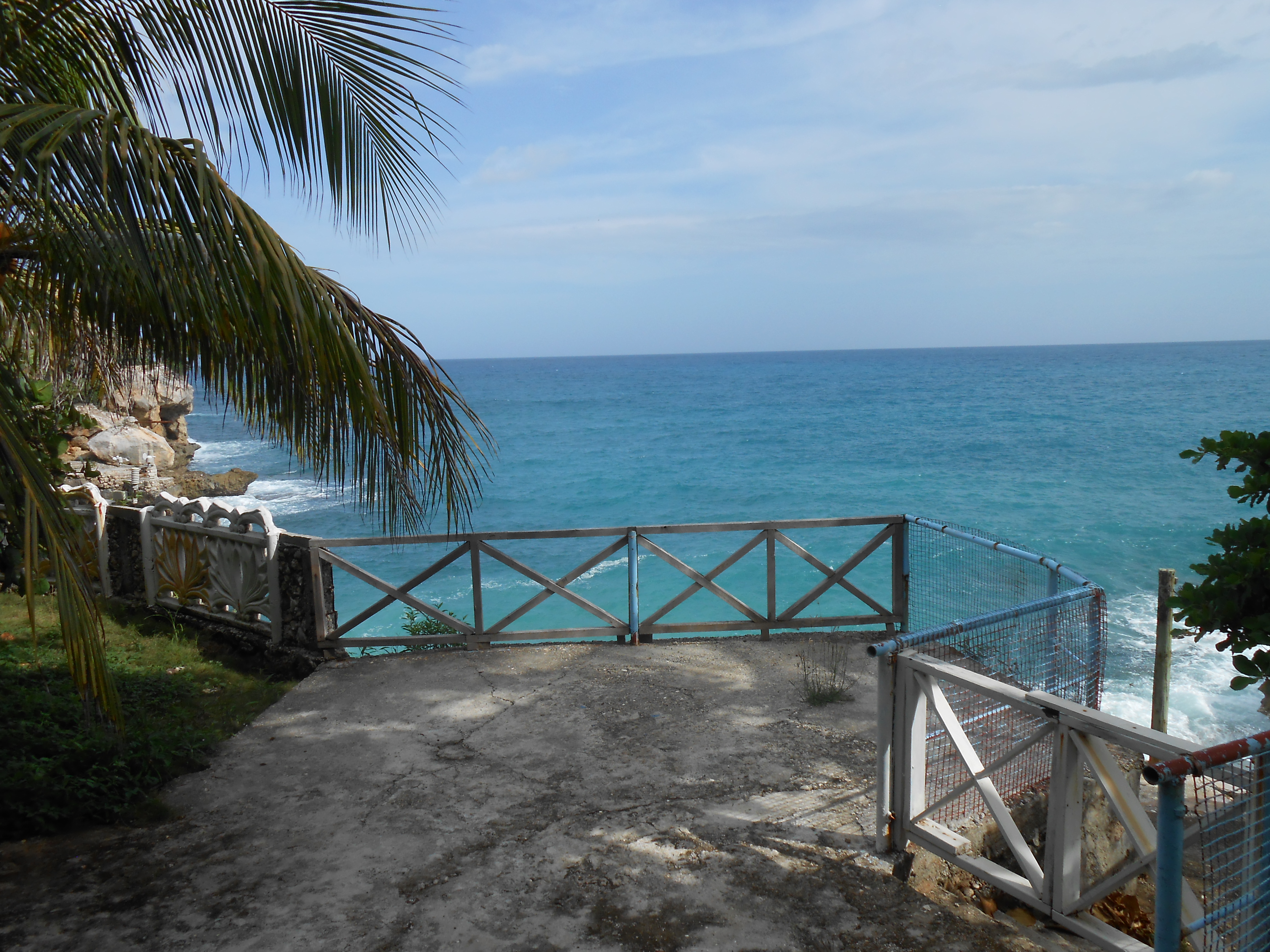
Therese and I shared a coconut because it had a lot of water.  While we were sitting at the beach, we got a call from Paula saying that she would be available to show us around Cine Institute. On our way back we stopped.  We received visitor’s passes and were allowed to park inside past an organic garden.  I made several pictures mostly of the cliff and ocean area for deep underwater diving.  We had a great conversation with Paula Hyppolite.  She shared some leaves from the ‘élan élan’ plant with us which seems to be disappearing in the country.
DSCN0859 DSCN0860 DSCN0869DSCN0876
We stopped by Kekette and Guito’s house, cousins of Eddy before getting back home.  They have a field of plantain and other fruit trees right in their backyard.

Day 18 – Wednesday May 29, 2013

I was awoken by a knock, apparently from the main gate.  No one answered.  The knocking repeated several times and eventually I just had to ignore it.  Weird. I finally woke up when I heard the car start because Eddy had to move the car on the side street before the market people occupied the closed street.

I decided to stay in the house with Therese and discuss questions and programming for the radio time the organization, Lipoufanm, will be sponsoring once a week on Sundays for two hours.  Therese is looking for the song ‘fanm d’Ayiti’ which will be the theme song for the program on Radio National d’Haiti.  The group’s slogan is: ‘ Konesans se Pouvwa, Pouvwa fanm se fòmasyon fanm’. She also made a list of music and possible topics she would like to present pending approval of the group.

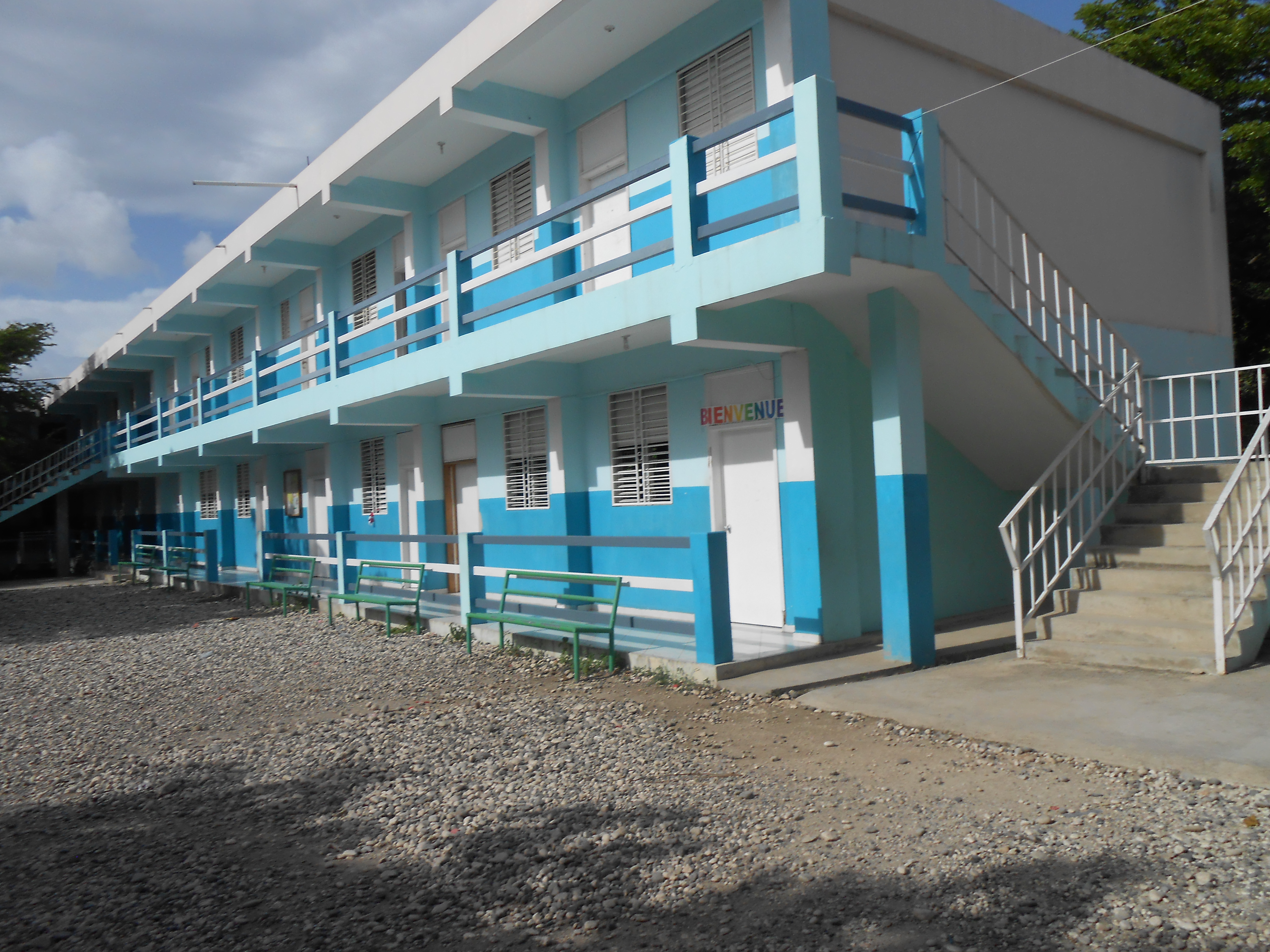
In the afternoon, Eddy and I visited the other part of town and the Salessians sisters at Lamandou where they have primary, junior high, high school, and an ‘ecole normale’.  The facility is well maintained.  The campus housing these schools looks quite spacious.  Eddy was surprised that this facility existed right here.

D16-902

School building

Day 19 – Thursday May 30, 2013

We woke up at 3:00 am so that we would all be ready before the black-out.  We were all ready just as the lights went out. We waited for the driver, Jeanjean, until 4:30 to get on the road to Port-au-Prince.  It was still dark on the tortuous road but at some points there were light reflectors on the parapets where the cliffs were at sharp turns.  We need a good driver to handle this twisted road around the mountain.
We made it to Port-au-Prince with moderate traffic jam except around Carefour.  We passed by Therese’s old house in Vivimitchel.  Then we went to Richard’s house where we ate the bread, lamveritab, and haran we had brought with us.  Therese got a call from Clifford who said he had returned home because A.A. said it had reimbursed the ticket money.  He would not be travelling to Haiti today.
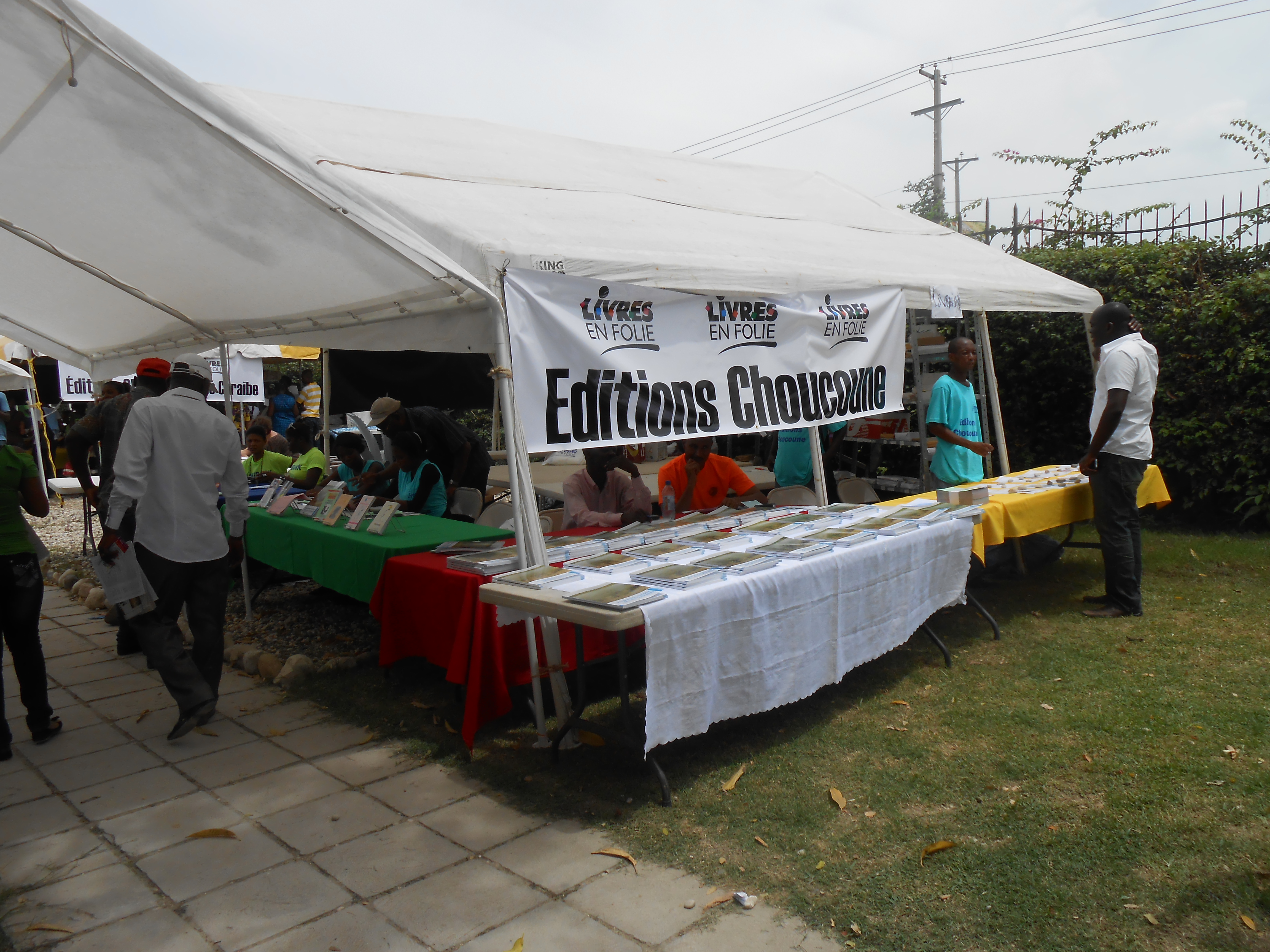
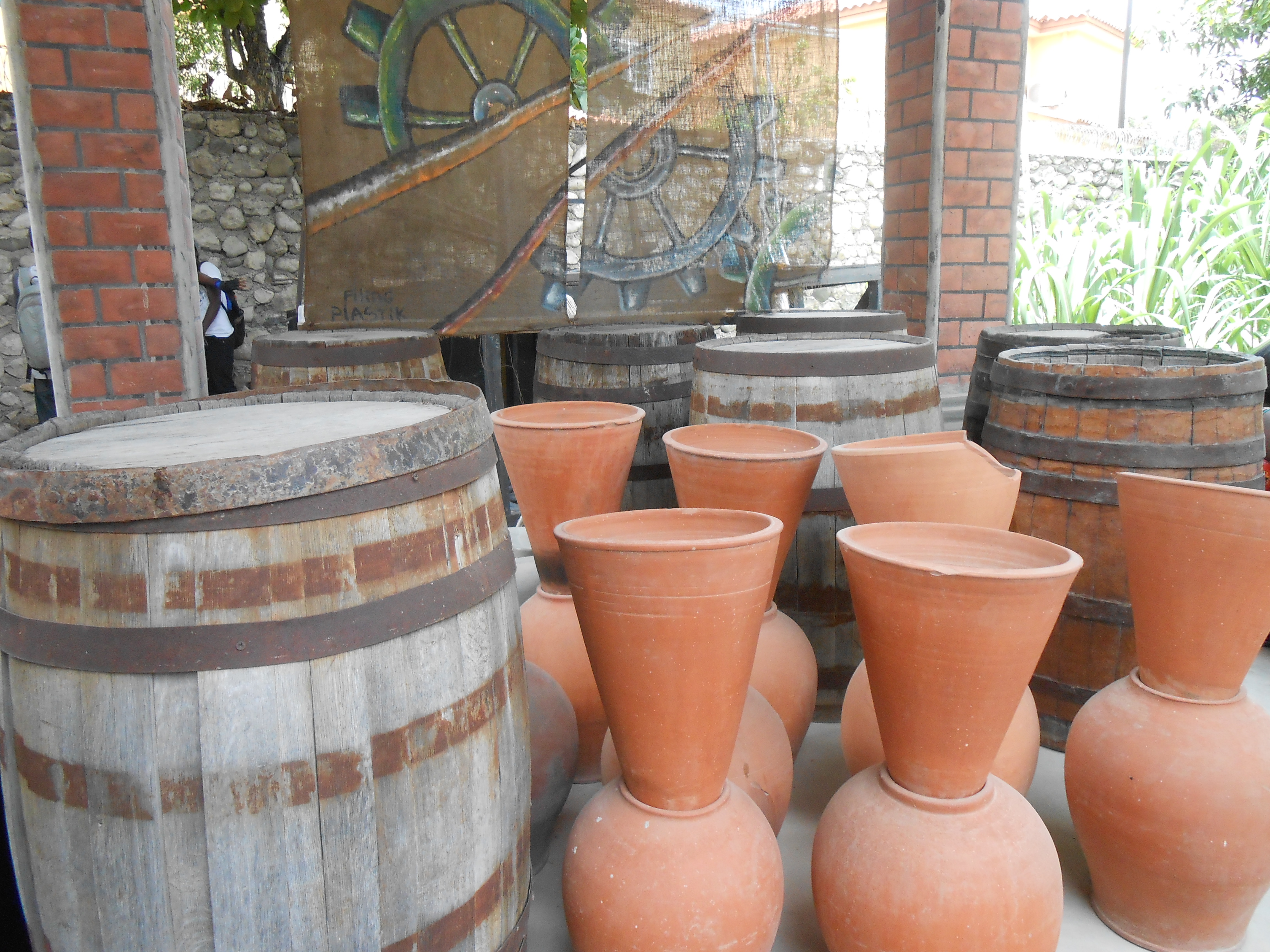
At Lily’s house, Therese had to do many phone calls to resolve this problem.  After an hour or so we went to ‘Livres en Folie’ at the Park Sucre a Canne in Tabarre.  There I visited the museum’s artifacts and viewed the pictures of Jacques Roumain’s family tree.
D19-936 D19-943 D19-947 D19-959 D19-951 DSCN0950 DSCN0949 DSCN0941
It was good to talk to Michaelle Auguste and Mrs. Leger about their projects—Haiti’s economic empowerment and memorial for the victims of the earth quake.
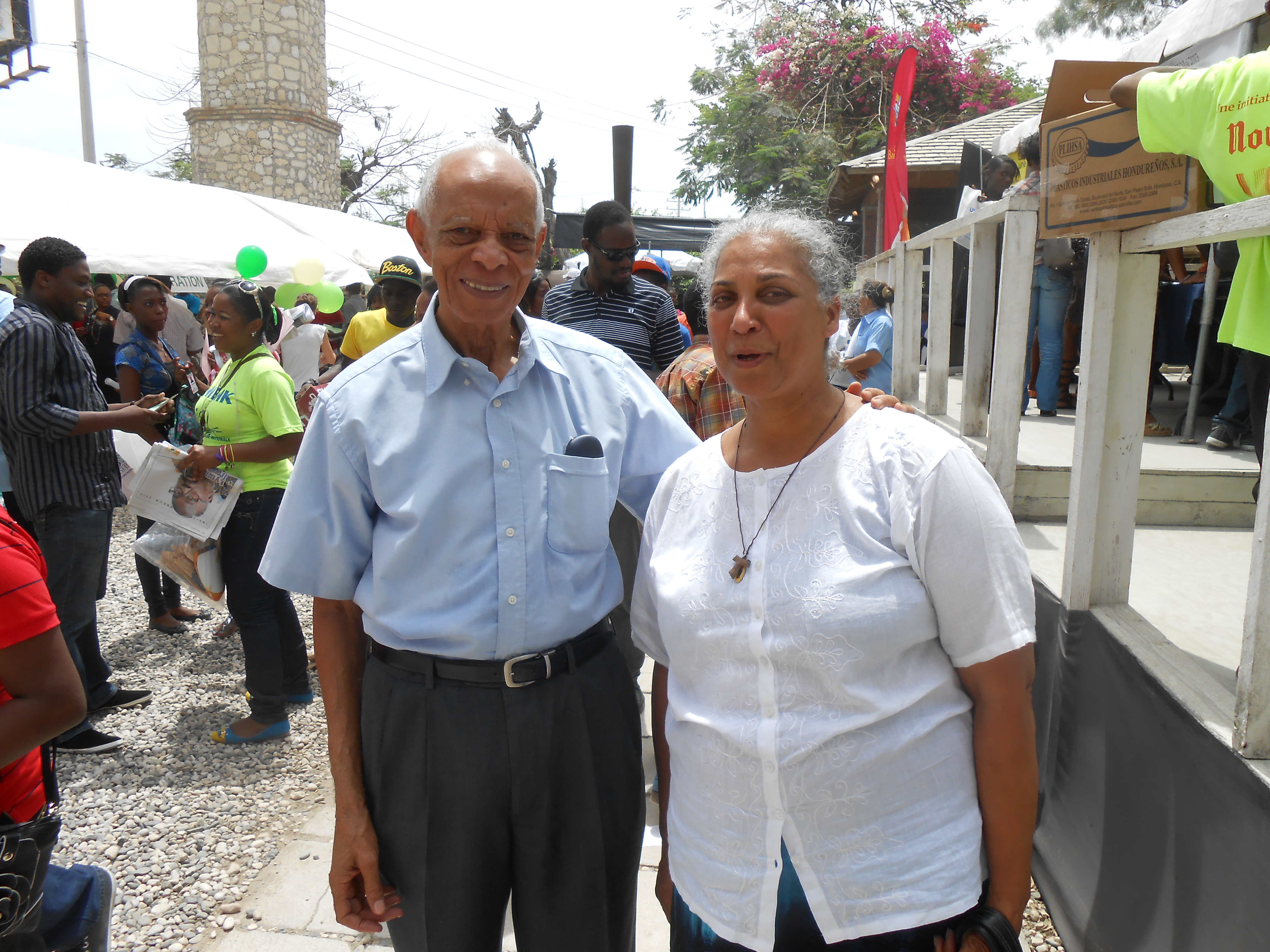
In that event I saw Fr. William Smarth who I had tried to contact since my arrival in Haiti.  In the afternoon after walking around the whole park seeing all the authors and the large crowd that came to buy books at a discounted price, we decided to leave.  Then on our way out, I saw Konpè Philo.  He was happy to see me too.  We took a picture together as he had to continue to do his interviews.
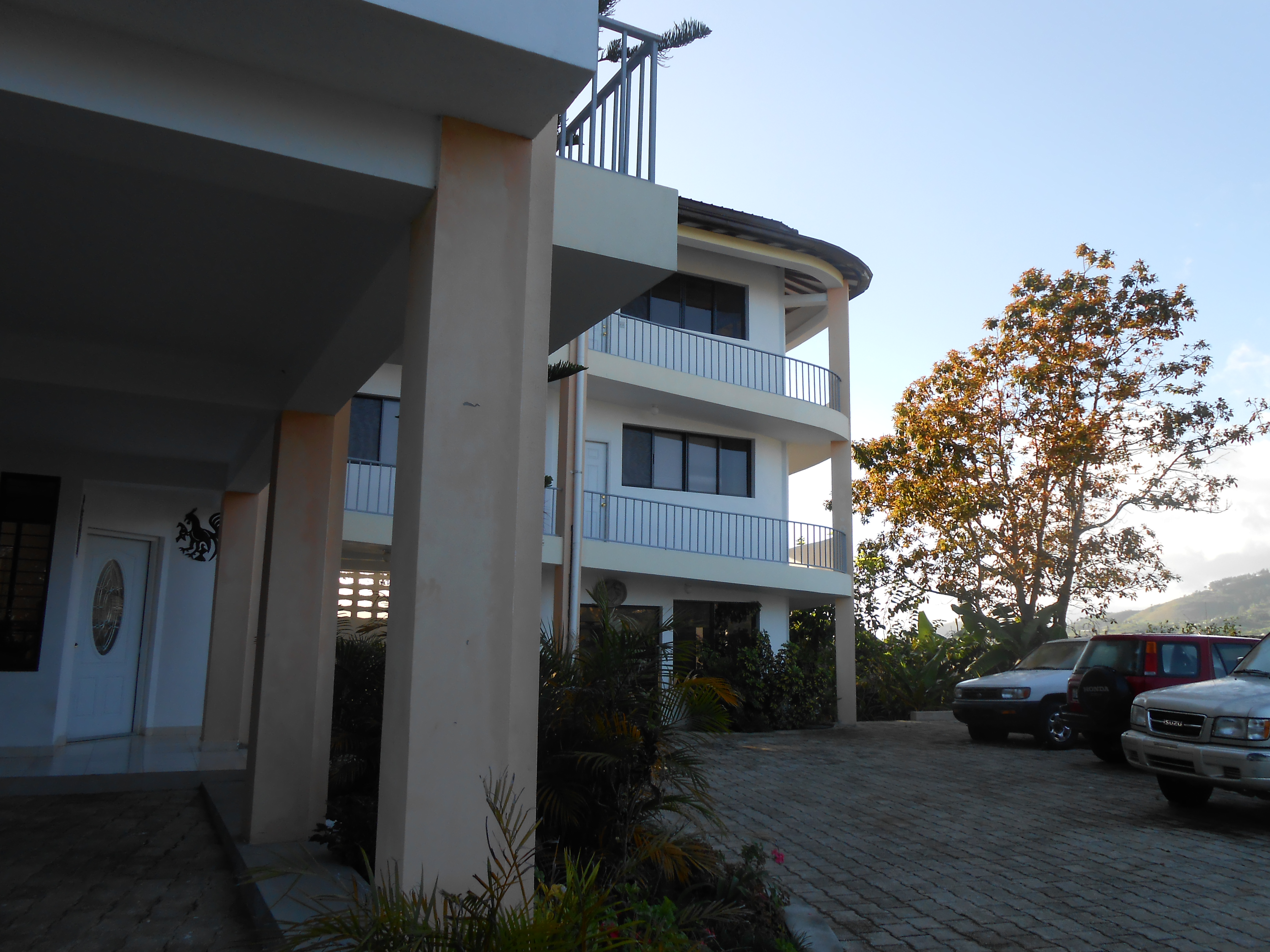
I was dropped at Alix’s house to be picked up by Roger Taneus to go to the Auberge Sur La Montagne at Fermathe.
Alix is in the midst of modifying his house to accommodate his planned pharmacy.  The roads were pretty smooth, even up to the top of the mountain where the Auberge is located.
D19-984 D19-1001 DSCN1022 DSCN1025
I met the other guests:  Mrs. Jeanine Miyot Paultre and Mr. Jean Pierre.
We had dinner and I went to bed early in very comfortable surroundings.

I really felt lucky.  I had left Haiti at 18 living practically alone with my older brother, Jean Claude, before I got married at 19.  My husband and I struggled to raise our family through hard work, discipline, and sacrifice.  We were able to do well.  I am so grateful for my aunt, Jacqueline Roumain, who ensured my education and instilled values in me. She had encouraged me to teach the ‘restavek’ children at Rallye de St. Gerard when I was sixteen. She testified of self-less giving to many members of the family while raising me.  I believe she would be proud of me.

Day 20 – Friday May 31, 2013

I woke up to the quiet of the hills.  I prayed and waited for other guests and personnel to get coffee ready.   We had watermelon, bananas, eggs, and bread for breakfast.  Mrs. Paultre and I walked down the mountain to St. Jacques de Compestello church.

D20-1086

St. Jacques de Compestello Church

The pastor talked about his parishioners who come in great numbers on Wednesdays for adoration and prayers (jeune).  He identified the statues we did not recognize. We continued walking until we reached the Baptiste mission on the main road.  I could not buy anything because I did not bring any money with me.D20-1099

Mrs. Paultre could not walk back up the mountain, she had heart palpitations.  We had to call Mr. Taneus to pick us up.

At midday we had fresh papaya’s juice and in the afternoon we had dinner of fish, plaintain, salad, rice and peas.  Finally, I was able to have access to wi-fi. I skyped my husband and daughter.
In the evening, Roger and I talked about the days we volunteered at HAUP.  He helped in restoring the building we, the grassroot community, had purchased to have a storefront on Linden Blvd. He mentioned the idea of converting part of the
auberge in Fermathe as a retirement or nursing home.  We discussed the need to have these types of secure facilities to provide for the aging population of Haitians in Diaspora.

Day 21 – Saturday June 1, 2013

Woke up early, prayed, prepared my suitcase, and got ready for breakfast.  Today breakfast was spaghetti and salad.  It gets a getting use to have spaghetti in the am.  Roger drove me to say hello to my brother, Patrick Roumain, at his place of business in Petionville.  He was happy to see me too.  I was pleased to see him working hard and doing well.
We drove to Alix’s where I was picked up by an old friend I had not seen in more than 30 years, Jean Claude Ferrus, who owns a medical supplies business.  He passed carefour Fleurio to drop off the bottle of liqueur for the sisters and we sat at the restaurant under the ‘choukoun’ to reminisce about our past in College Bird and our current lives.  He too understands the concept of hard work and sacrifice to achieve your goals and family success.
DSCN1125 DSCN1128
He was very gracious after our meet-up to drop me at the airport.
At the airport there were many missionaries (all white people).  One group had lime shirts and another orange t-shirts.  A group boarded first going I believe to Georgia.  The other group was going to be on the same plane I was on (2 passengers next to me were from Ireland).  http://www.childrenslifeline.com/ and http://www.alexshouse-haiti.blogspot.com/
Someone told me at a fund raising event organized by Zafèn at St. John’s University, “Haiti is a cemetery of good intentions.” Everyone wants to do their own things the way they feel it must be done.  There is no mobilization to analyze and see what the community really needs, what resources, talents and gifts are available to do it.  Then with the people for whom this is intended educate and implement.
The non-profit organizations which have proliferated since the earth quake of 2010 must be controlled and organized and made accountable for the benefit of those they are servicing without enriching themselves.   As St. Vincent de Paul said “The poor do not suffer from lack of charity.  They suffer from lack of organization.”   The generous missionary zeal should be appreciated but not create dependency.  The humanitarian aids don’t have enough resources to change the existing economic disparity within in the country.  This can only be achieved with the concerted efforts of the public and private sectors of the nation and its citizens.
I waited until 3:30 pm to board.  During the turbulence the food service was quite delayed but we had a pretty decent flight. We arrived in NY at 7:50 pm. I waited a while by the carousel to get the luggage then walked outside to get a taxi.  It cost $30 (tips included) to get home.  While waiting and in the cab, I gave praise to God for having done a safe and enjoyable trip.

My daughter Natalie had a sign ‘Welcome Home’ at the door.  It was good to be in the house I lived in since 1972.

Back in New York.

Conflicted!  What bothered me most was not the poverty I expected but the squalor, the filth in some areas where the people are moving and selling their wares; the mushrooming of people on streets and the apparent acceptance of these revolting muddy conditions that people are existing in.  The cars we were in just past by seemingly oblivious of what is around.
Paradox! What do I claim as my home?  The United States where I had the opportunity to complete my education and raise my family; or the land I was born and raised for 18 years? There is the pull to be in a country that you care about and yet feel uncomfortable in because you would like to see improvements for all people.  I have been in community building for most of my life in the States and yet in Haiti I don’t get the impression that this is an ideal.
Walls are being built 5 to 8 feet high to keep people in or out.  There seems to be a dormant mistrust/‘mefiance’ between the people in every social class.  Those who have are afraid of those who are impoverished.  Those who are destitute expect something from those who have as their due (arrogance) and are ready to get what they want by force or ‘nan koken’.  I heard this expression a lot “y a manje w” out of suspicion, fear or envy.
L’union fait la force seems to have been a two dimensional motto for the spark of independence and never put into practice.  We should say that ‘chak koukouy klere pou tèt pa yo’ is the rule in application in all levels of society.  A country cannot progress with such an attitude.
I have witnessed generous giving, dedication, sacrifice on the part of the missionaries and religious.  The controversy is to teach the recipients of our charity the ability to help themselves to become independent of continued handouts.
Many may believe I am being judgmental right now.  It seems that some people of the country are complacent in mediocrity or substandard achievements.  Wait a minute.  When I was at NYU studying administration and management, I had to attend Methods and Procedure classes teaching me how to organize paper to be more effective and productive.  I had to learn what seemed ridiculous to some.  Who is teaching them?  Who is providing opportunity not only for learning and improvements and ways to break the cycle?  Torn?  Yes.  I need to walk the talk to fully appreciate where we were, where we are, and where we want to be!
Even when we admire the past we must live in the present. The people seem to suffer from a sense of powerlessness aggravated by years of neglect and unvalued human dignity.
When we talk about the past and our heroes, I always hear:  “koupe tèt boule kay”.  We are stuck in one aspect of the need for freedom that is to get rid of the unwanted burden of slavery’s bind.  It is time to hear loud and clear from every corner of that land, a rallying cry:  “ANN REBATI  LAKAY” regardless if we are within the boundaries of the country or outside the country.  This must be done with all willing conscientious participants.  It is a God given right and responsibility to manage the land that we have received.  ANN BATI, ANN REBATI….
Rebuilding morally!  Rebuilding the concept of community—we are in it together. I would also throw in two other ingredients: peace and love.

In all the communities I lived in during my journey, we prayed to be one in the Lord and to do our best to imitate Him in small and great ways.  So it is I pray.

Reconnecting with Roots: Country, Relatives, and Friends

On June 1-3, 2012 I attended the faith filled solidarity conference “Haiti: One Table, Many Partners” in Washington DC organized by USCCB and Catholic Relief Services (CRS).
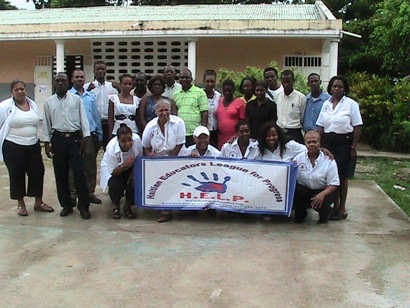
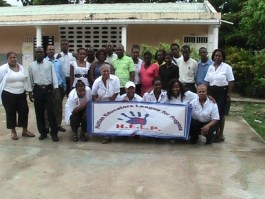
Haiti’s Episcopal Conference asked the US church to continue the missionary work which will help in the new evangelization and have a hand in changing the structure of poverty prevailing in the country. This is one of the factors that motivated me to go back to Haiti.  The last time I was in the country was in summer of 1995.  I decided to join the educators of Brooklyn and Queens” H.E.L.P. (Haitian Educators League for Progress), in their trip that summer — August 28, 2012. The last time I was in the country was in summer of 1995.
IMG_0732      DSC_0545

I wanted to meet family before the program started so left NY on Wednesday the 8th.  I stayed a few days with my sister, Sandra, in Fermath.  She and her children took a field trip with me to Sault D’eau on Saturday.

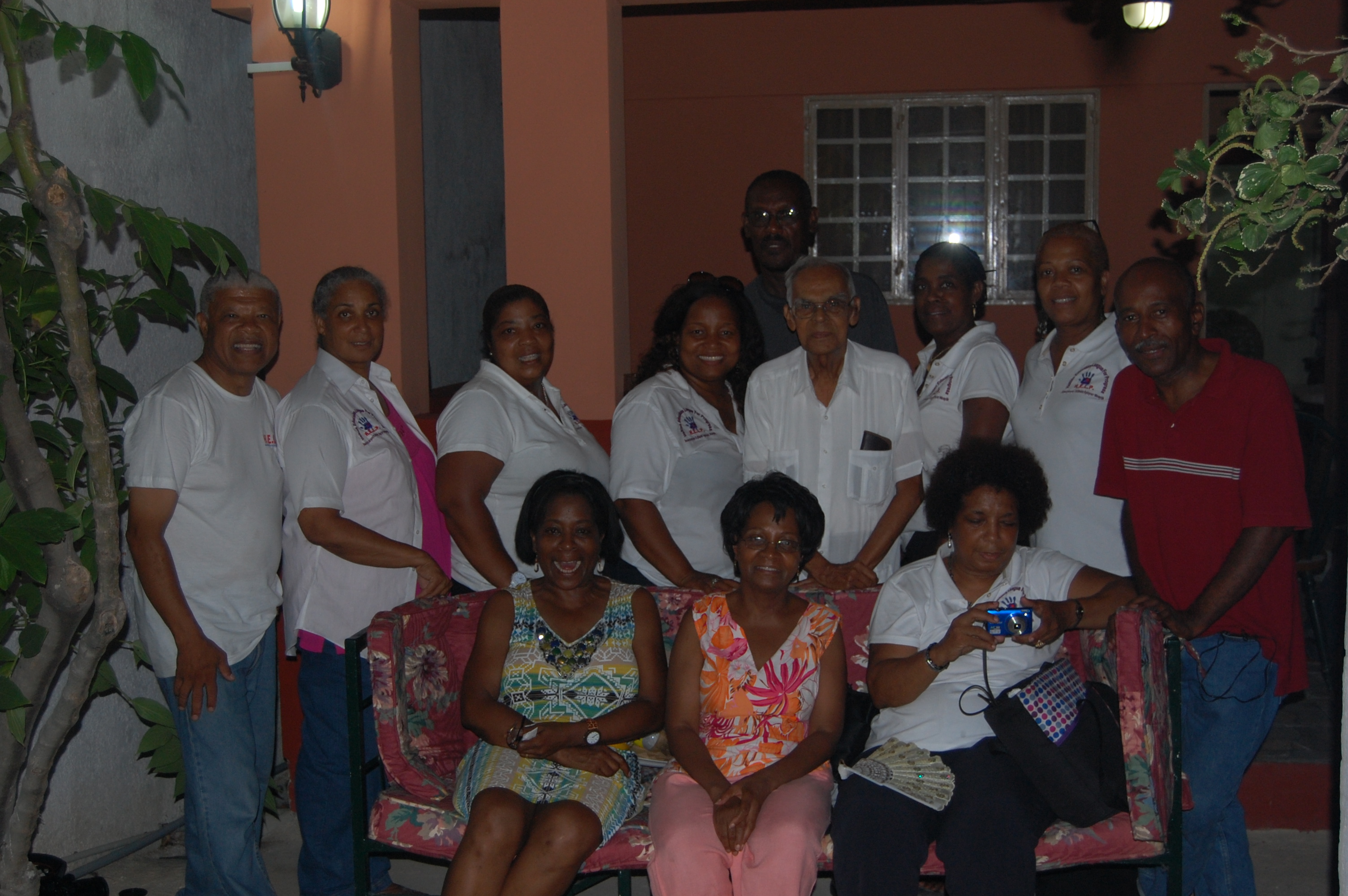
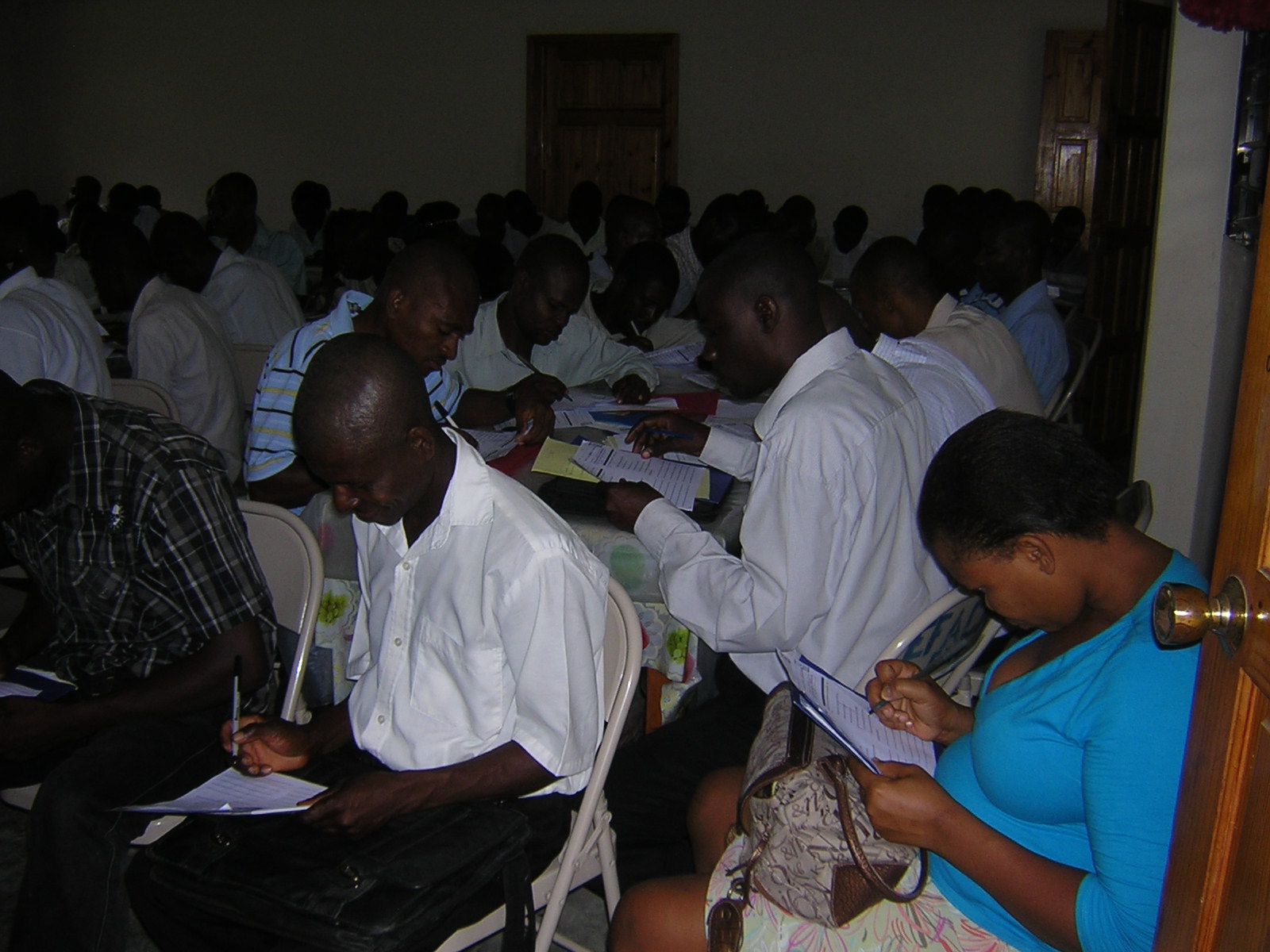
Sunday 12 the group came together in Port-au-Prince, had a great lunch at a member’s relative’s house, then we travelled to Miragoane the same day arriving late evening in the house in Payan where we stayed until Thursday the 16th.  Every day we traveled back and forth from Payan to Fonds des Nègres where  HELP provided training at the EFACAP facility to about 150 teachers.  On Wednesday, we went to Petit-Goave where we attended church, had dinner, some when to a night event and spent a night. On the 16th to 18th, we spent time in Camp Perin at the Recul. We visited the town of Port Salut where we had lunch in a hotel owned by a retired teacher from Brooklyn. That same day we traveled to Anse-a-Veau and spent a night there at the Rectory.  CORA members and town personalities came to meet with us.  On Sunday we met with Bishop Dumas and a few priests.  We made it to Port-au-Prince on the 19th and did training for teachers at the College Paul Robert at 147 Avenue Christophe then we moved to another school at the corner of Rue Capois for the following two days.  On the 23rd we travelled to Thomazeau and did training again for about 100 teachers.  I also had a chance to reconnect with some childhood friends.  HELP members and supporters had a celebratory get-together on Thursday the 24th at a member’s residence.  I visited the Daughters of Charity with Sr. Dease, OSF and Mike Anderson on Friday the 25th.
 DSC_0027     DSCN9019

I was to travel back to New York on Saturday, the 26 but Hurricane Isaac had begun on Friday night and planes were cancelled.  Fortunately I was with my step-mother in Pacot for those last few days.

I finally was able to catch a flight on Monday evening after a horrendous day waiting for planes since 8 am.  American Airlines did not provided additional planes for the backlogged flights.  I spent the whole day at the airport in Port-au-Prince until 8 pm.  Then the plane landed in Miami although I had paid for a direct flight for the 26th.  I spend the night on the floor at the airport.  It was a real chaos in Florida airport.  No clear directives.  I could not believe I was in the US a supposedly well organized and efficient airport.  We stood in lines the night for three hours (until 2 am) to get a confirmation and again in the morning (at 4 am) to get the bags checked.  All flights regardless of time of departure were on the same lines to be checked in.  The passengers had to call out loud to get additional agents –almost creating a riot– to have the airline managers address this state of overwhelming disorganization.  I finally arrived in NY Tuesday evening very exhausted and quite angry with the airline’s handling of the situation for the amount of money requested for the tickets and the apparent inefficiency and lack of sensitivity training of their personnel.
DSCN9277       DSCN9278

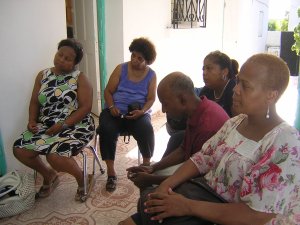
Sabine Albert. August 2012 wrote the following after the trip for CORA’s benefit in order to plan their anticipated development program.
A summation and my observations during HELP’s visit to Anse à Veaux
Upon entering the town, it was apparent that this is a quaint and picturesque part of Haiti.  The town is small and easily navigable.  One does not need transportation to go around town.  There are street lights within Anse- à-Veaux which are smartly powered by solar panels.  The town council appears to be very enthusiastic about the upcoming tri-centennial.  They are very proud and ready to have an influx of visitors to their hometown.
Accessing the town was quite a challenge.  We had to cross two rivers, but I believe that this issue would soon be resolved since the government was in the process of constructing a large enough road and a bridge over one of the primary rivers in the area.  The lack of roads makes it difficult for trade to occur in the area.  This part of Haiti is very fertile but production is not encouraged since many do not have the capacity to get their goods to the major markets of Port-au-Prince or Miragoâne.  Fruits and vegetables are left to rot and this abundance that is self produced and naturally generated goes to waste.  Breadfruit, papaya, avocados, and many other items are plentiful that would be quite profitable to the local economy if transportation was not an issue.  Even if there were no specific or direct road to Anse-à-Veaux, it is important that all major towns be connected by navigable auto-routes.
We attempted to identify areas that would be appealing to tourism.  It appears that a series of activities would have to take place in order to raise the appeal of the town.  We questioned whether the town infrastructure would be sufficient to receive a large influx of visitors.  A beach is of utmost importance when thinking of a Caribbean town.  The beach that is frequently used by the locals is mainly an area used by young folks.  It is a brisk walk from town, a couple of miles in my estimate.  Once one reaches the beach, there is a steep climb to actually reach the beach itself.  We drove to the closest access point possible and a few members of the team walked down to the beach front.  This is an area where some minor accommodations would have to be made to make it attractive to both the local and international tourist industry.
It was recommended that the schools involve the local youth in identifying the historical sites and have them participate in restoration activities.  Structures that were deemed unsound should be cordoned off to preserve whatever remains.  Signs should be made to identify these structures with the help of local artist to minimize cost and give a sense of ownership to town residents.  Improvements around town should keep the rustic appeal while incorporating some modern elements.
The council discussed the fact that when it rains, a major section of the town, including valuable farmland was flooded by the river.  They have suggested for years that an embankment be built to deviate the river water directly to the ocean and bypassing homes and farms.  They would also like to see a port build to access the town by sea.  Many recalled (whether from eyewitness accounts or from having been told from elders) that a port did exist at one point and this was a major factor in making Anse à Veaux a successful and thriving city in the past.  L’Ile de la Gonâve is clearly visible from the coastline.  This island has become a tourist destination and has two all-inclusive resorts. This is a partial list of sites that might be of interest to a visitor:
Fort Jean Jacques Akao ;  Sauld du Baril ;  Fort des Bois/Barreau;  Fort Nativité;
Fort St. Anne ;  2 caves of Moncour/Monrecour and the house of President Sudre Dartiguenave.
There is a university that was scheduled to open its doors this September of 2012.  The “Ecole EPSA” is a polytechnic school.  Instructors would like to prepare their students to the level of a Bachelors of Arts.  They currently are building a computer and language lab and would like to have a Cyber-center for the students and broader community.  The instructors expressed the need to train thinkers and future leaders, people who will create jobs with the skills that they have learned, not necessarily those who will work for others in a nation where the unemployment rate is alarmingly high.